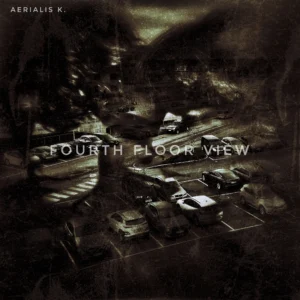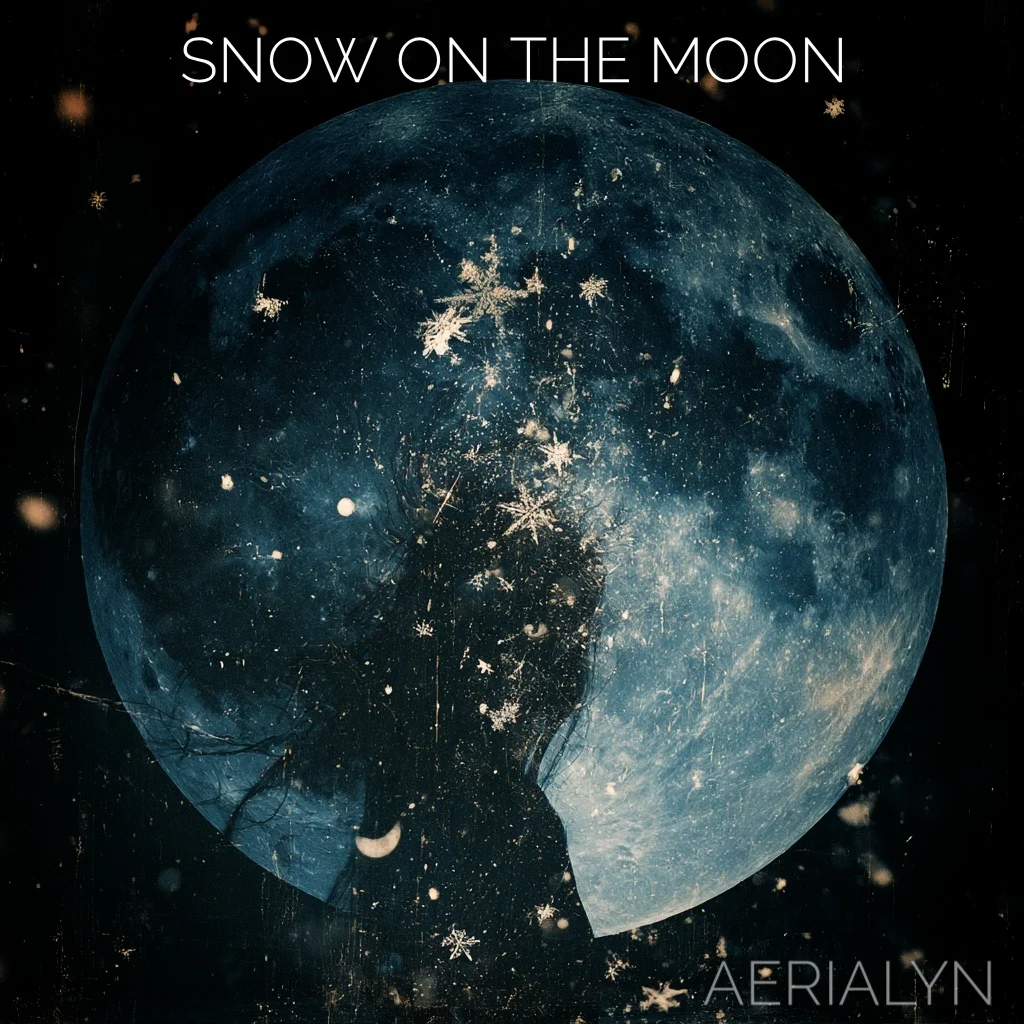
Running just shy of an hour, the record stands out not only for its stylistic breadth—spanning psychedelic Southern gothic, Hammond-drenched blues-soul, dream pop, and junkyard trip-hop—but also for the remarkable literary and emotional cohesion that binds its songs.
Rather than operating as a collection of disconnected singles, Snow on the Moon functions like a nocturnal concept piece about the aftermath of love: the quiet domestic spaces left behind, the asymmetry of heartbreak, and the slow, unglamorous process of reckoning with human vulnerability.
The Architecture of the Album: A Journey Through Aftermath
Sequenced with deliberate dramatic pacing, the album moves through distinct emotional phases—from cosmic detachment and domestic paralysis to moments of fleeting warmth, before arriving at stark, stripped-back acceptance.
- Opening in Orbit: The 6-minute-13-second title track, “Snow on the Moon,” establishes the record’s central metaphor immediately. Set against a slow, breathy psychedelic Americana backdrop, love is framed as something that “lost its gravity” and drifted too high, leaving two people as “ghosts in a photograph” in a landscape where “nothing melts in this light / nothing grows in this white”.
- The Domestic Morning After: From the vast emptiness of space, the album drops abruptly into a kitchen sink on “Lukewarm Coffee”. Over a soul-jazz-funk groove, a cooling mug becomes an anchor for emotional exhaustion—“cold enough to know / still too far to go”. Here, grief isn’t loud; it is measured in small sips, bruised morning skies, and shoes waiting by the door that never leave.
- Cycles of Ambivalence and Departure: The middle third of the album examines how people hurt each other—sometimes casually, sometimes inevitably. On “You Kissed Me Again,” warm blues-soul and gospel-inflected Hammond organ frame a bittersweet, cinematic reunion in a parking lot, complete with gin-and-Listerine humor and the lingering ache of “waiting for the other shoe to drop”. “Wet Asphalt” follows with stately piano and low-register vocals, contrasting a clear blue sky with the emotional downpour of someone walking out without looking back.
- A Glimpse of Sunlight: Roughly two-thirds of the way through, the record briefly cracks open a window. “Brimful of Hollow” brings in Rhodes piano, dobro, and 90s underground nostalgia (“Everybody needs a bop to survive”), “The Wind” offers an acoustic folk plea to step outside and “melt this fear,” and “Ice Cream Man” bursts into neo-psychedelic jangle and dream pop—capturing the nervous thrill of a summer crush (“If I pay in courage instead of change?”) before impermanence inevitably creeps back in.
- Stripped-Back Reckoning: The closing stretch peels away all defenses. “The Saddest Love Son in the World” reduces the arrangement to solo piano, Hammond organ, and spaghetti-western minimalism for a devastatingly cyclical look at toxic attachment (“You only love me when you hate me / You only hate me when you’re sorry”). After the dark, coming-of-age regret of “Switchblade,” the album closes with “Five Reasons,” building from airy dulcimer and marimba into gritty trip-hop beats, blues harp, and echoing junkyard percussion as the narrator catalogs the blunt, inescapable truth of being alive.
Lyricism and Core Themes
What makes Snow on the Moon compelling on the page is its refusal to rely on abstract clichés. Across the 16 tracks, several recurring thematic threads emerge:
1. The Asymmetry of Pain One of the sharpest insights on the record appears on “Crushed,” a mellow, melancholic blues number that cuts straight to the imbalance of emotional neglect: “The ones who do the crushing feel nothing / It’s the one being crushed who feels what’s happening”. That same asymmetry echoes through “I Learned,” where intimacy is replaced by the physical memory of someone turning away (“I learned the shape / Of a back turned on me / The way your shoulders went / Small as a locked door”).
2. Thresholds, Doors, and Half-Measures Imagery of doors, windowsills, and thresholds recurs throughout the album as symbols of emotional paralysis. On “I’m Standing at Your Door,” driven by transcendental Southern gothic Rhodes tones, the narrator is caught in total ambivalence—knocking repeatedly while admitting, “I got one foot in / The other one’s out / And it’s so hard to let you in”. Similarly, “Little Bird” uses the delicate metaphor of a bird at a windowsill at dawn, leaving the latch undone and crumbs on the ledge while accepting that “Maybe you were never mine / Only borrowed for a while”.
3. Love as Action vs. Illusion Repeatedly, the lyrics interrogate the gap between what people say and what they do. “Wet Asphalt” states it plainly: “You say that you love me / But love is an action / An act that you used to do”. On “The Snake and the Apple,” temptation and fallout are framed as an irreversible turning point (“The first mistake was the biggest one / And the world changed from that point on”), while “All Alone in the Crowd” turns the gaze inward, confronting the isolation of trying to perform normalcy (“If I could just be good for one more night / Then everything would be alright”).
4. Radical Humanity in an AI Collaboration Perhaps the most striking paradox of Snow on the Moon is how deeply embodied its writing feels. Despite being created through AI-assisted music production by Aerialyn and AERIALIS K., the album is obsessed with physical sensation—the taste of gin, cold hands, wet pavement, a jacket left on a chair, melting ice cream on a wrist, and the sheer weight of having a pulse. The closing lines of “Five Reasons” serve as a mission statement for the entire record: “Number five / I have a body / Which makes me human / And it hurts”.
Sonic Storytelling: Production as Narrative
Every stylistic shift on Snow on the Moon serves the emotional subtext of the lyrics rather than acting as mere genre-hopping. The pairing of spring-reverb guitar, Mellotron, Vox organ, and an intimate, lightly doubled vocal on “I Learned” heightens the sensation of memory echoing down an empty hallway. The percussive, old-fashioned Hammond organ on “Switchblade” underscores the restless, bruised nostalgia of youth. And by saving its most textured, cinematic arrangement—dulcimer, marimba, distorted guitar swells, and junkyard percussion—for “Five Reasons,” the album transforms a quiet confession into a cathartic finale.
Snow on the Moon succeeds because it treats genre as atmosphere and lyricism as architecture. By anchoring cosmic metaphors in kitchen-sink realism, Aerialyn and AERIALIS K. have crafted a cohesive, deeply resonant record that lingers long after the final reverberations fade.