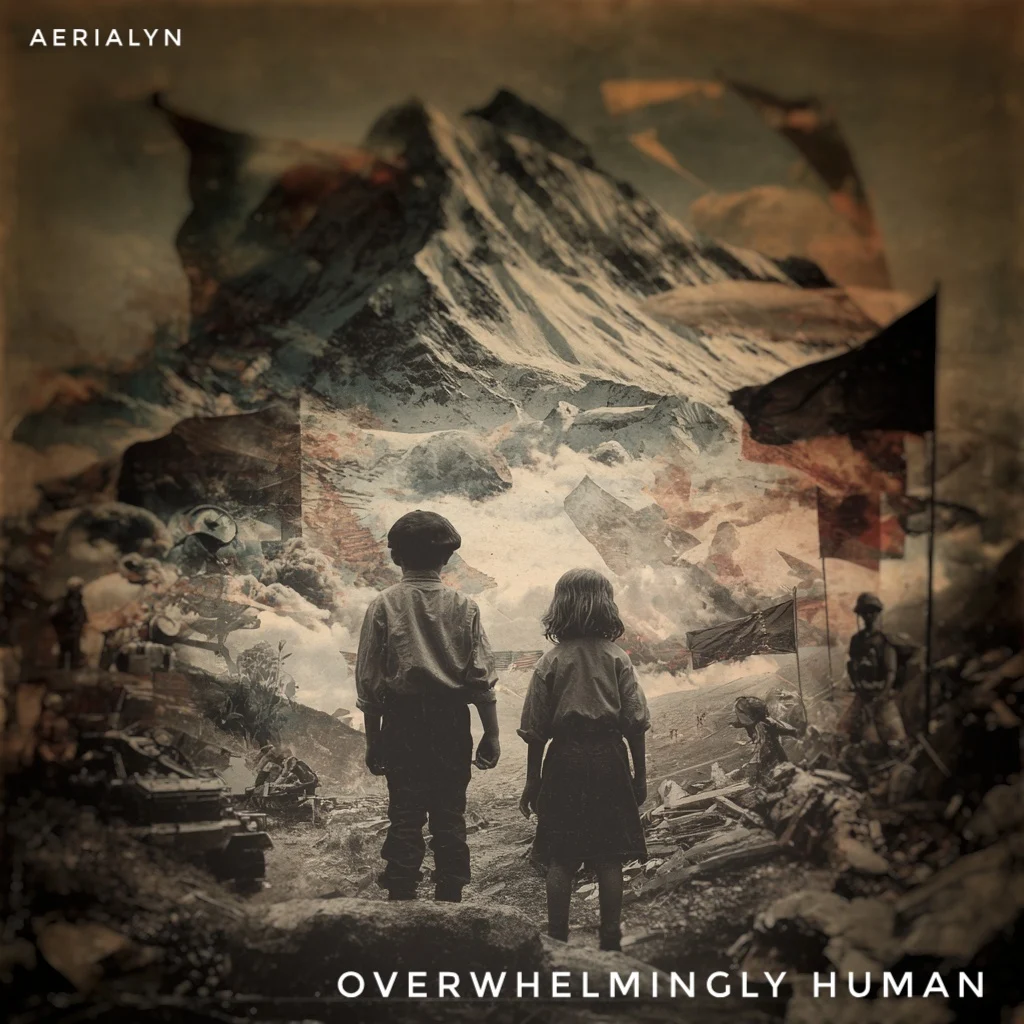
At its foundation lies a classic country sensibility: acoustic instrumentation, narrative-driven lyrics, and a strong emotional core. But Aerialyn pushes outward from that base, incorporating the rhythmic drive and melodic phrasing of Mexican norteña, where accordion-like textures and grounded grooves evoke movement, migration, and cultural intersection. At the same time, elements of lo-fi pop seep into the production—subtle textures, softened edges, and intimate sonic spaces that create a sense of closeness, as if each song is unfolding in the listener’s own room.
There is also a clear singer/songwriter tradition running throughout the album, with a focus on voice, vulnerability, and lyrical precision. Aerialyn’s delivery feels immediate and human, never overproduced, allowing the weight of the words to carry through. This intimacy is contrasted by moments of stark, cinematic scale inspired by Ennio Morricone’s spaghetti western soundscapes—wide, open sonic horizons, sparse arrangements, and a haunting sense of tension that underscores the album’s themes of conflict, morality, and survival.
At its heart, the record is a plea for empathy. Songs like Prepare for Peace and Sleep, Little Country reject the language of fear and conflict, instead advocating for small, daily acts of care as the foundation for lasting peace. Aerialyn reframes peace not as an abstract ideal, but as a discipline—something practiced in conversation, in community, and in the quiet choices people make every day.
Yet Overwhelmingly Human does not shy away from the consequences of failing to live by those ideals. Tracks such as The Kids on the Ground and Names on the Floor offer stark, devastating portraits of war’s human cost, centering the innocent lives lost beneath political decisions and sanitized language. Here, the music often mirrors the message—stripped-back arrangements, tense atmospheres, and minimalistic production choices that leave space for the gravity of the subject matter to resonate.
The album also takes aim at systems of power and inequality. In Fortunate Sons, Aerialyn exposes the distance between those who make decisions about war and those who bear its consequences, often supported by a subtle, almost ironic musical brightness that contrasts with its critique. Paper Name explores identity and dehumanization within immigration systems, blending rhythmic influences and melodic repetition to reflect both movement and constraint. Meanwhile, Wrong No Matter What cuts through political polarization with a raw, direct delivery that feels closer to spoken word than traditional song structure.
Running parallel to these broader themes is a deeply personal undercurrent. Songs like The Stars Came Down and Lost Leader introduce warmth, fragility, and introspection—moments where the expansive sonic world narrows into something deeply personal. These tracks highlight love, doubt, and memory, reminding the listener that even within global narratives, it is individual experience that gives everything its meaning.
The title track, Overwhelmingly Human, encapsulates the album’s central tension—our tendency to take what is given and fracture it, to divide what could unite us. Musically and lyrically, it sits at the intersection of the album’s influences, balancing simplicity and scale, intimacy and universality.
Closing with the call-to-action anthem Rise Up, Aerialyn shifts from reflection to responsibility. The arrangement builds with quiet determination, echoing the album’s core message: systems may fail, leaders may falter, but the collective voice of ordinary people remains powerful.
Ultimately, Overwhelmingly Human is not just an album—it is a mirror. Through its fusion of genres and its unwavering thematic focus, it reflects both the beauty and the failure that define us, urging listeners to choose empathy, accountability, and courage in a time when all three are urgently needed.